

The immersion week
Twenty lessons, one city, a fortnight of talking. What the standard don Quijote week actually contains, hour by hour.
Read the guide
Independent editorial desk · Spanish immersion
We read course calendars, placement policies, housing briefs and accreditation registers for don Quijote Spanish schools and the wider immersion market — then write down what an ordinary fortnight in Madrid, Salamanca, Barcelona or Valencia actually looks like.
The signature week
Almost every Spanish immersion week in Spain follows the same four-beat rhythm. Schools differ in how honestly they run it, and that is what we spend our time checking.
Step one
A written test plus a short interview on the first morning. The interview decides the class; the test decides the paperwork. A level move should still be possible on day two.
Step two
Four lessons of fifty-five minutes, split by the coffee break where most learners first speak without rehearsing. Grammar early, use later, homework short by design.
Step three
Electives, tandem hours, cooking, a market walk, a museum with a worksheet. The point is not entertainment; it is speaking outside a building where everyone is paid to understand you.
Step four
A short oral plus a written note stating hours, level and what to work on. Keep it: employers, universities and reimbursement schemes read exactly those lines.
Programmes
Six guides covering the offers learners actually compare, from a twenty-lesson intensive week to a supervised summer camp. Each one is written around hours, levels, housing and what goes wrong.
Twenty lessons, one city, a fortnight of talking. What the standard don Quijote week actually contains, hour by hour.
Read the guide
Working backwards from the examination date, with the level checks most learners skip until it is too late.
Read the guide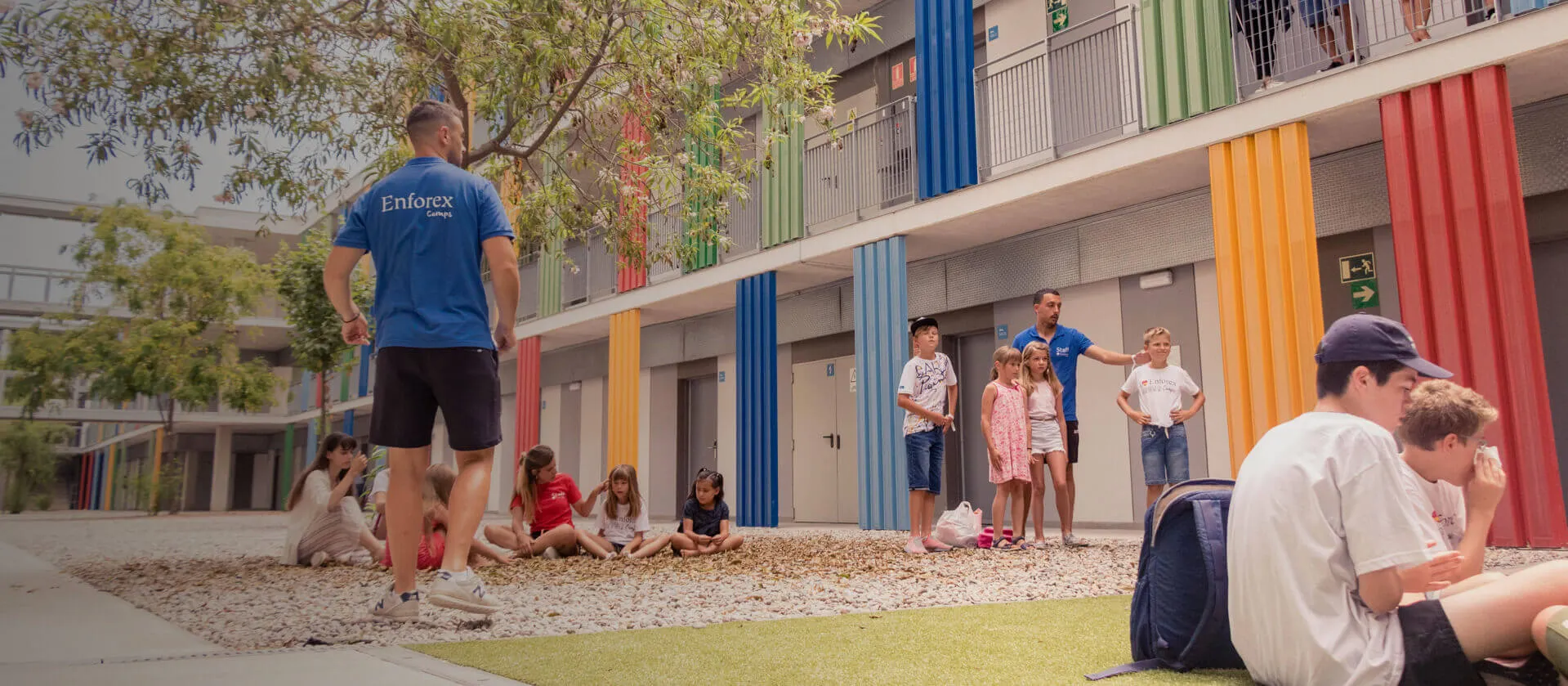
Supervision ratios, sport, excursions and the paperwork that comes with sending a fifteen-year-old abroad.
Read the guide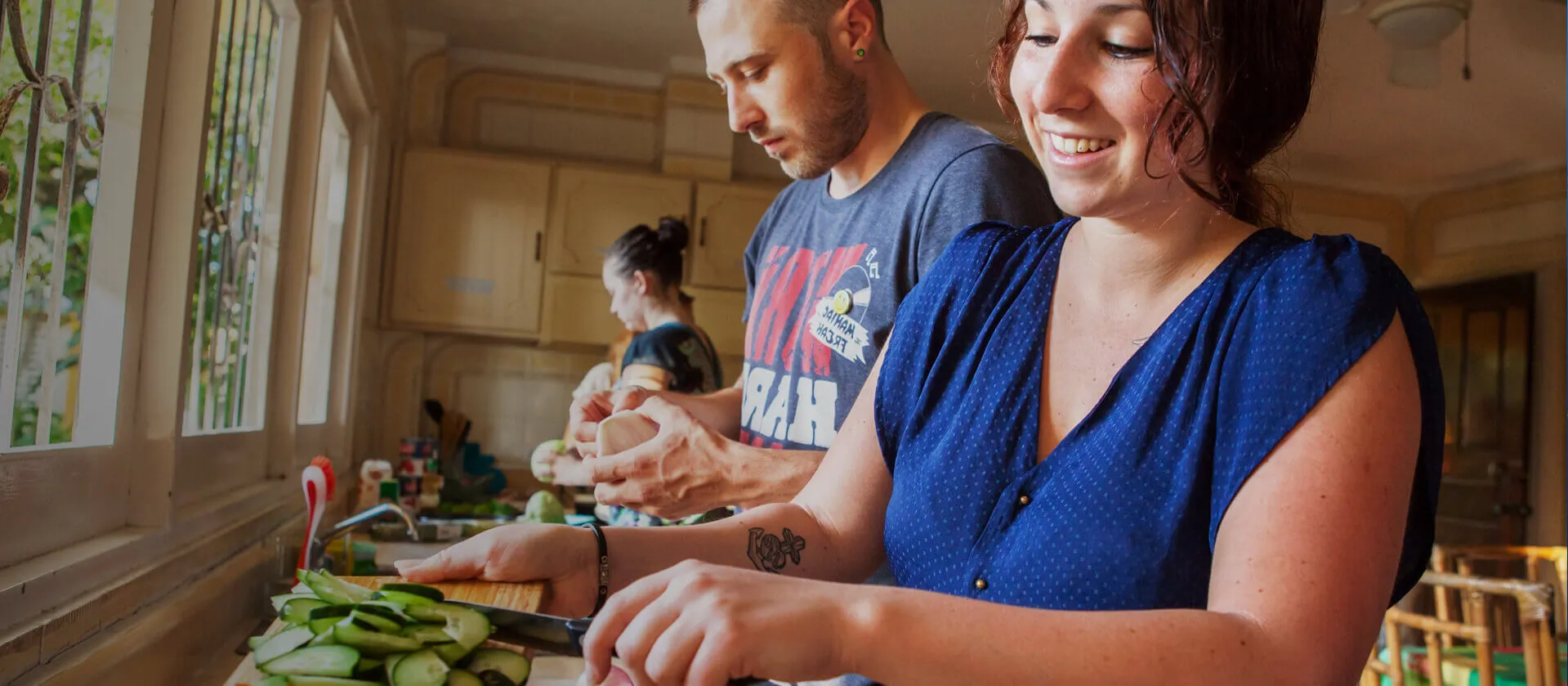
Meals, quiet hours and the difference between a household and a hotel room with a hob.
Read the guide
How A2 becomes B1 in tasks rather than chapters, and why placement interviews matter more than tests.
Read the guide
Accents, seasons, flight time and cost of living, weighed for a fortnight rather than a gap year.
Read the guideDestinations
Four Spanish cities carry most of the demand, and each rewards a different kind of learner. Latin America changes the calculation entirely — flights, seasons, accents and cost of living all at once.

A capital that never runs out of afternoons: big-city anonymity, deep culture programme, the widest range of levels running at once.
Madrid in detail
The student city where the walk to class takes six minutes and half the town is used to slow Spanish for foreigners.
Salamanca in detail
Bilingual streets, strong evening life and the highest risk of drifting into English if the week is not arranged carefully.
Barcelona in detail
Sea, cheaper housing and a timetable that survives August better than most, provided you respect the afternoon.
Valencia in detailAlso in the market · ~30% of this desk
Most of this site is about Spanish immersion with don Quijote. The remaining share is head-to-heads with other language-travel brands learners actually google — so you can see when a Spanish-specialist week wins, and when a multi-language trip still fits.
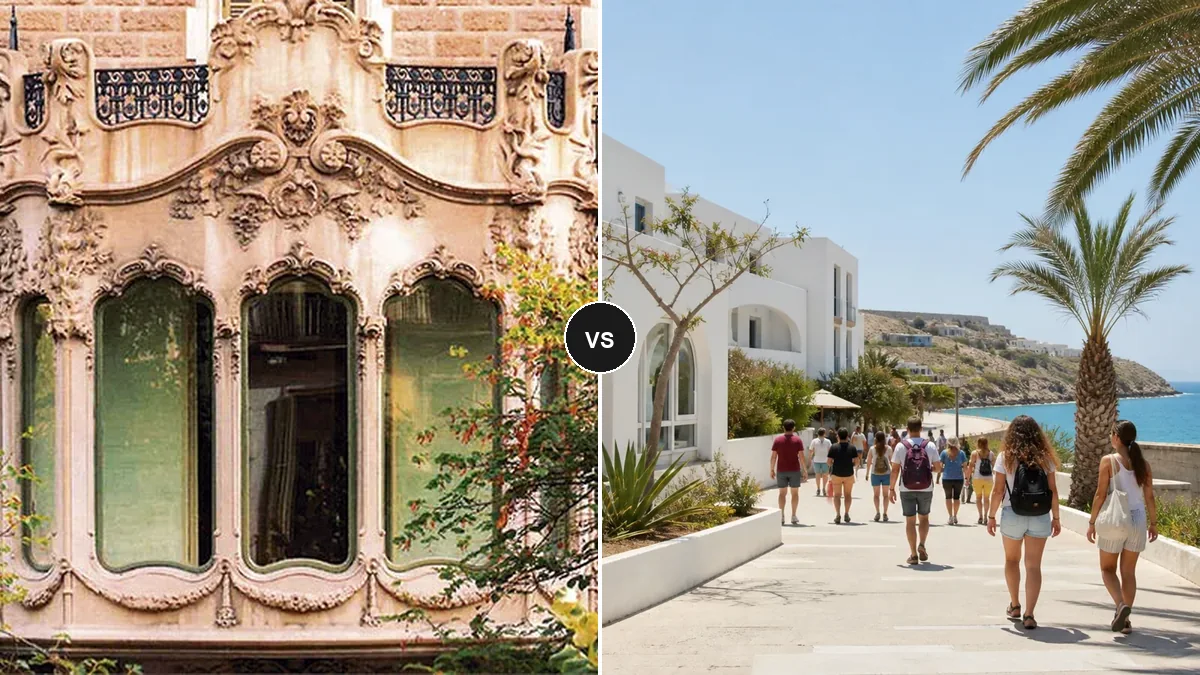

Spanish-only immersion campus vs multi-language trip camps — depth of Spanish versus variety of destinations.
Read the head-to-head →

Specialist Spanish schools vs a global language-stay network that also books English, French and more.
Read the head-to-head →

Two Spanish school networks side by side: cities, intensives, housing and who each path fits.
Read the head-to-head →Marks worth checking
These are the labels that appear in the Spanish immersion market. We treat each as a question — is there a register entry, an inspection date, a named centre — rather than a decoration in a footer.
Voices
Comments sent to the desk, lightly edited for length. We publish the awkward parts too, because the fourth day is usually the one nobody warns you about.

I had studied Spanish for two years on Tuesday evenings and could not order lunch without rehearsing. Three weeks in Salamanca broke that. The classes were fine, but the host mother arguing with her sister about the electricity bill taught me more than any exercise.

The fourth day was miserable and the seventh was the one that changed things. I stopped translating in my head somewhere around the second Monday. What I would do differently: fewer weeks, more afternoon conversation, and I would have asked about the class cap.

I almost booked a multi-language camp because the brochure looked busier. Reading the Sprachcaffe head-to-head here pushed me toward a Spanish-only week instead — less touring, more speaking. The right call for my level.
Nobody remembers the grammar drill. Everybody remembers the afternoon they argued about football in a language they had been studying for two years and never used.
The offer, read closely
One way to think about the don Quijote immersion offer at a glance is as a series of small commitments rather than a single large decision. Nothing in our files supports the idea that a longer course automatically produces a higher level. A transport pass costs less than a fortnight of taxis and forces you into the small talk of a bus queue. Choose a host family for the first week if speaking is the goal and independence can wait. Choose the version you will actually turn up for, then let repetition do the rest.
Nothing about the don Quijote immersion offer at a glance is complicated, yet a great deal of it is easy to get slightly wrong. Course weeks are counted from Monday, so a Sunday arrival buys you a settling day rather than a lesson. Tell the school about your weakest area — often spontaneous speaking — before the placement interview rather than after the first class. Our reading of enrolment terms suggests a level guarantee covers placement, not the classmates you end up with. Everything above assumes one thing only: that you want to be spoken to in Spanish.
One way to think about the don Quijote immersion offer at a glance is as a series of small commitments rather than a single large decision. Aggregators are excellent at inventory and weaker at telling you which classroom suits a nervous B2 learner. Record two minutes of yourself speaking on day one, then repeat the exercise on the last day. We do not know your ear, your patience or your calendar, and those three decide most of it. So the answer is less exciting than the question, which is generally a good sign.
Anyone comparing the don Quijote immersion offer at a glance across schools soon notices that the differences hide in timetable footnotes rather than headline claims. Culture programmes attach to the academic week rather than replacing it, typically two or three sessions plus a weekend option. Request the housing brief in writing, including meal times and whether other learners share the flat. Every recommendation here assumes you are prepared to be bored, tired and wrong out loud for two weeks. That is the whole of it: hours, honesty about level and a city you can walk.
Before committing to the don Quijote immersion offer at a glance, it helps to picture the room: how many classmates, which nationalities, and how often the group turns over. Visa letters, where they are needed, depend on enrolment length and come from the school rather than an agent. We avoid ranking schools numerically because the variables that matter are not commensurable. Where FEDELE membership is claimed, we look for the register entry rather than the badge in the footer. A fortnight arranged like that repays the effort of arranging it.
The way schools describe the don Quijote immersion offer at a glance has converged over the past decade; the way they deliver it has not. We are describing tendencies rather than guarantees, and a single week can defy every tendency listed here. Laundry, pharmacies and post offices supply the vocabulary that makes a city feel navigable. Where an EAQUALS inspection cycle is claimed, we look for the register entry rather than the badge in the footer. Where a network runs its own buildings, standards travel between cities more predictably than through partner agreements. Anything beyond that is decoration, and decoration is cheap.
Planning for the don Quijote immersion offer at a glance rewards a long runway: three months to arrange, one week to settle and a fortnight to consolidate. No amount of afternoon culture compensates for a class pitched two levels away from yours. The strongest correlation we can see is between protected speaking time and reported confidence at the end. Heat in late June reorganises everything: lessons early, the afternoon respected, social life after nine. With that in place, the rest is a matter of showing up and staying tired.
The strongest argument for choosing a Spanish school without a broker is repetition: the same faces, the same street and the same language, day after day. Compare two providers on hours, cap, housing and travel time in a four-column table before deciding. One-to-one lessons are sold as add-ons and behave like physiotherapy: short, targeted, best spent on a known weakness. Generalists win on convenience; specialists win on the third week, when the syllabus has to keep up with you. Carry a paper notebook and write the vocabulary you meet in the street rather than in the book. The remainder is attendance, which nobody can outsource.
Before committing to choosing a Spanish school without a broker, it helps to picture the room: how many classmates, which nationalities, and how often the group turns over. Comparing three seasons of published start dates shows that low-season classes merge levels when numbers drop. Menus, ticket machines and pharmacy counters teach registers that no textbook sequences properly. None of this removes the ordinary risk that a class fills, a level merges or a teacher changes midweek. Placement normally happens through a written test plus a short interview, and the interview matters more than the form. Where those conditions hold, the details tend to look after themselves.
For choosing a Spanish school without a broker the useful unit is a fortnight: long enough for a routine to form, short enough to remember in detail. A C1 learner spends the first days translating internally; by the fourth day that translation lag usually halves. Tandem schemes pair learners with local students, and the good ones publish attendance rather than intentions. Insurance and medical cover are the boring items that become the only items when something goes wrong. Everything we know about this points the same way: fewer weeks, more hours, more talking.
Anyone comparing choosing a Spanish school without a broker across schools soon notices that the differences hide in timetable footnotes rather than headline claims. A B2 learner spends the first days translating internally; by the fourth day that translation lag usually halves. Assessment at the end of a fortnight is usually oral plus written, scored against the level you were placed into. Nothing in our files supports the idea that a longer course automatically produces a higher level. The specialist argument is simple: everything in the building, including the noticeboard, is in the language you came for. On that basis, comparison becomes arithmetic rather than atmosphere.
For choosing a Spanish school without a broker the useful unit is a fortnight: long enough for a routine to form, short enough to remember in detail. Write the plan on one page and show it to somebody who has taught A2 learners. A fortnight is enough to change habits and not enough to change level, whatever the marketing implies. Groups are capped somewhere between eight and fourteen, and that cap is the most reliable predictor of speaking minutes. So the answer is less exciting than the question, which is generally a good sign.
Treat choosing a Spanish school without a broker as an editorial question first — what is verifiable, what is marketing, and what only becomes visible on arrival. Arrange the return flight for an evening so the final morning still counts as a lesson. The academic year runs continuously, with intensity peaking in early October and thinning noticeably outside school holidays. Menus, ticket machines and pharmacy counters teach registers that no textbook sequences properly. Reader reports logged since the spring point consistently at group size rather than teacher quality as the decisive variable. Read the paperwork, then go and be misunderstood for a fortnight; it works.
Start with the immersion week, then compare destinations and the head-to-heads against multi-language operators.
Contact
Send the fortnight you have available, your current level and the two cities you are weighing up. We reply with the questions we would ask a school in your position.
Enquiry received
The desk will reply with timetable questions worth asking. If you need a faster answer, call or write directly.