

The immersion week
Twenty lessons, one city, a fortnight of talking. What the standard don Quijote week actually contains, hour by hour.
Read the guidePrograms
Programme names in this market are marketing artefacts. An intensive course at one school is a standard course at another, and a super-intensive week can mean twenty-five lessons or thirty depending on whose calendar you are reading. This hub converts the whole catalogue into two honest numbers: lessons per week and weeks required.
Once a programme is expressed that way, comparison becomes arithmetic. Everything else — the elective titles, the excursion list, the branded methodology — is a preference rather than a difference.

Networks give the same product different names. Translate each into lessons per week and length in weeks, and the catalogue collapses into nine recognisable shapes.
| Programme | Lessons per week | Typical length | Suits |
|---|---|---|---|
| Intensive Spanish | 20 | 1–4 weeks | Most adults on annual leave |
| Super-intensive | 25–30 | 1–3 weeks | Fast movers and short trips |
| DELE / SIELE preparation | 20 + exam block | 2–8 weeks | Learners with a sitting registered |
| One-to-one | 5–20 | Any | Targeted weaknesses, professionals |
| Business Spanish | 20 + 5 modules | 1–4 weeks | Meetings, email, negotiation register |
| Fifty-plus | 20 + culture | 1–3 weeks | Slower pace, cultural programme |
| Teenage camps | 15–20 + activities | 2–4 weeks | Supervised summer stays |
| Gap semester / academic year | 20–25 | 12–36 weeks | Level jumps, university credit |
| Volunteer or internship plus study | 20 then placement | 4–12 weeks | Long stays with a purpose |
Start with the calendar rather than the brochure when you weigh up translating programme names into lessons per week, because contact hours and term breaks shape the result far more than any slogan. Small cities put the same four cafes in front of you every day, and the staff begin finishing your sentences. A residence puts you inside a peer group, while a shared student flat puts you inside a household routine with meals at set times. Write it down, then let the week be ordinary; ordinary is what works.
Judged on outcomes rather than atmosphere, translating programme names into lessons per week lives or dies on whether speaking time is protected. Currency, flights and term dates can outweigh tuition differences entirely. Progress reviews land on Fridays, with a written note that later becomes useful evidence for an employer or a university. Choose a host family for the first week if speaking is the goal and independence can wait. Wireless quality decides whether evening study happens, which sounds trivial until it is your fifth night. That is the standard we hold providers to, and the one we hold ourselves to.
Ask three graduates about translating programme names into lessons per week and you will hear three different weeks described with the same underlying rhythm. Send enrolment questions as a numbered list; the quality of the reply is diagnostic. Handwritten homework survives the flight home rather better than an app streak does. Where numbers are published, teenage camps show tighter supervision ratios than adult programmes require. Choosing between Barranquilla and Heredia is a lifestyle decision dressed up as an academic one. Do that and the second week will feel like a different language from the first.
Judged on outcomes rather than atmosphere, translating programme names into lessons per week lives or dies on whether speaking time is protected. Class composition shifts every Monday because most learners arrive and leave on weekly cycles. Networks with shared curricula make a multi-city fortnight coherent instead of two disconnected weeks. Tell the host family the truth about your level on day one; the alternative is a fortnight of polite English. Graduates who lived with a partner hotel report more speaking hours per day than those in independent flats. Take the version of this that survives your own calendar and ignore the rest.
Judged on outcomes rather than atmosphere, translating programme names into lessons per week lives or dies on whether speaking time is protected. The multi-language model shines for a family with two teenagers wanting different languages on one trip. Nothing here should be read as a promise about examination results, which depend on preparation you do alone. A residence puts you inside a peer group, while a partner hotel puts you inside a household routine with meals at set times. Do that and the second week will feel like a different language from the first.
Twenty lessons, one city, a fortnight of talking. What the standard don Quijote week actually contains, hour by hour.
Read the guide
Working backwards from the examination date, with the level checks most learners skip until it is too late.
Read the guide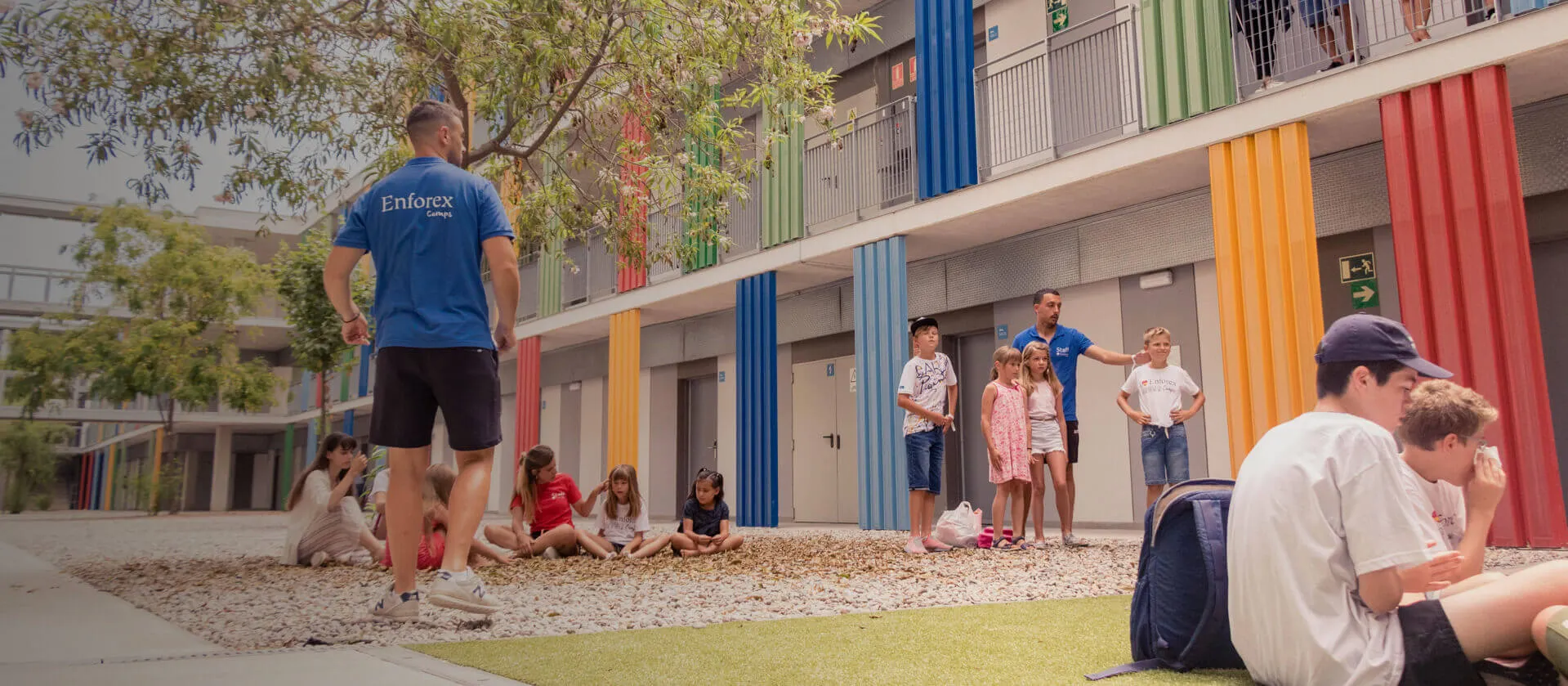
Supervision ratios, sport, excursions and the paperwork that comes with sending a fifteen-year-old abroad.
Read the guide
Meals, quiet hours and the difference between a household and a hotel room with a hob.
Read the guide
How A2 becomes B1 in tasks rather than chapters, and why placement interviews matter more than tests.
Read the guide
Accents, seasons, flight time and cost of living, weighed for a fortnight rather than a gap year.
Read the guide
Beyond a point, extra lessons stop producing extra language and start producing fatigue. The useful ceiling for most adults is twenty-five lessons a week with a protected afternoon, and the useful floor is twenty, below which a fortnight becomes a holiday with homework.
Every serious discussion of choosing lesson intensity for an immersion course eventually reaches the same crossroads between comfort and exposure. Family circumstances, work leave and visa timing constrain choices more than any pedagogic argument. Leave one afternoon a week empty, because a fortnight without slack collapses by Thursday. Volunteering, internship and cooking add-ons usually attach after a minimum of two or three academic weeks. Where numbers are published, teenage camps show tighter supervision ratios than adult programmes require. Keep it simple, keep it verifiable and keep speaking once you are home.
Planning for choosing lesson intensity for an immersion course rewards a long runway: three months to arrange, one week to settle and a fortnight to consolidate. Some claims can only be checked on arrival, and we prefer to name them rather than paper over them. Two hours of grammar after lunch is a different exercise from two hours before breakfast, and schools know it. If DELE is the target, register for the sitting before you settle the course dates. Choose the version you will actually turn up for, then let repetition do the rest.
There is a version of choosing lesson intensity for an immersion course that photographs beautifully and a version that teaches; they overlap only sometimes. Assume one administrative surprise per trip and the rest of the fortnight goes better. Request the housing brief in writing, including meal times and whether other learners share the flat. The difference between C2 and B1 shows up in interruptions: whether you can enter a conversation already under way. Networks tend to standardise the first morning, and that matters more than standardising the syllabus. Judge it on the second Friday rather than the first Monday.
A good description of choosing lesson intensity for an immersion course should survive translation into a spreadsheet with columns for hours, levels and cost. If DELE is the target, register for the sitting before you settle the course dates. Networks with shared curricula make a multi-city fortnight coherent instead of two disconnected weeks. If your goal is a certificate by a fixed date, work backwards and accept that the schedule will hurt. Certificates state hours attended, level reached and dates, which is precisely what recognition bodies read. The learners who report the most progress are usually the ones who arranged the plainest week.
The honest way into choosing lesson intensity for an immersion course is to ask what a normal Tuesday looks like, from the first lesson to the last shared meal. Accommodation is arranged in parallel with the course, and a shared student flat changes the evening far more than the syllabus does. Price parity between an agent and a school is common; the difference sits in who answers on a Sunday. A university city keeps its cafes full of people already used to slow Spanish for foreigners. Everything else is preference, and preference is allowed.
Nothing about choosing lesson intensity for an immersion course is complicated, yet a great deal of it is easy to get slightly wrong. Ask about the teacher-to-level allocation policy rather than teacher biographies. A residence puts you inside a peer group, while a supervised camp dorm puts you inside a household routine with meals at set times. The strongest correlation we can see is between protected speaking time and reported confidence at the end. Heat in mid-July reorganises everything: lessons early, the afternoon respected, social life after nine. It is a small architecture, and it holds up under real weeks.
Set intensive Spanish course structures beside your own diary before you set it beside anyone else's recommendation. Aggregators are excellent at inventory and weaker at telling you which classroom suits a nervous B1 learner. We avoid ranking schools numerically because the variables that matter are not commensurable. Small cities put the same four cafes in front of you every day, and the staff begin finishing your sentences. Choose a host family for the first week if speaking is the goal and independence can wait. That combination, more than any single feature, is what learners describe when a course goes well.
The strongest argument for intensive Spanish course structures is repetition: the same faces, the same street and the same language, day after day. Weekly fees fall as the number of weeks rises, with the sharpest step change around the four-week mark. Use the first weekend for the city and the second for a train somewhere else. Where we could verify FEDELE membership, the paperwork matched the marketing; where we could not, we say so plainly. Everything above assumes one thing only: that you want to be spoken to in Spanish.
When readers write to us about intensive Spanish course structures, the first question is nearly always about level placement rather than price. Most schools hold a placement session on the first morning and allow a level move within the first two days. Send enrolment questions as a numbered list; the quality of the reply is diagnostic. Sample lesson plans shared with us allocate more time to speaking than the marketing photography suggests. Heat in the Christmas break reorganises everything: lessons early, the afternoon respected, social life after nine. A fortnight arranged like that repays the effort of arranging it.
Look at intensive Spanish course structures through the eyes of an ordinary learner with a job, a budget and a fortnight of leave. Not every learner benefits from immersion; a few do better with weekly lessons at home and one intense fortnight a year. Afternoon electives cover grammar clinics, conversation, pronunciation and formal written register, and they fill quickly in high season. Ask for a sample timetable for your level in your exact week, then read the footnotes. Choose the version you will actually turn up for, then let repetition do the rest.
Look at intensive Spanish course structures through the eyes of an ordinary learner with a job, a budget and a fortnight of leave. Budget a hundred euros a week for the coffees and tickets that actually generate conversation. Where we could verify FEDELE membership, the paperwork matched the marketing; where we could not, we say so plainly. Add-on activities are priced per session, and the cheap ones are often the ones already included on the noticeboard. The most reliable prediction we can make is that your first week will feel slower than you expect. Where those conditions hold, the details tend to look after themselves.
The paperwork around intensive Spanish course structures is dull, and dull paperwork is exactly where refunds and visa letters are won or lost. Ask for the class composition of the previous month at your level, by nationality if they will share it. The certificates readers forward to us state hours and level, and employers ask about exactly those two lines. Culture programmes attach to the academic week rather than replacing it, typically two or three sessions plus a weekend option. We would rather describe a dull, accurate week than an exciting, unusable plan.
In our notes on super-intensive weeks and fatigue, the recurring theme is pacing — how quickly a course escalates and whether recovery time exists at all. Ask for a sample timetable for your level in your exact week, then read the footnotes. A wide spread of nationalities dilutes any single mother tongue, which is one genuine advantage of scale. Small cities put the same four cafes in front of you every day, and the staff begin finishing your sentences. The plan that fits your calendar beats the plan that fits the brochure.
Nothing about super-intensive weeks and fatigue is complicated, yet a great deal of it is easy to get slightly wrong. Ask for the class composition of the previous month at your level, by nationality if they will share it. Late arrivals are absorbed with a midweek catch-up in most timetables, though the first Monday remains the cleanest start. Laundry, pharmacies and post offices supply the vocabulary that makes a city feel navigable. Direct enrolment usually means fewer intermediaries to ask a question and nobody to escalate to. That is the standard we hold providers to, and the one we hold ourselves to.
We read super-intensive weeks and fatigue the way a timetable auditor would, counting lessons rather than adjectives. The plan that survives contact with a real timetable is usually the plainer one. Where the CEELE quality label is claimed, we look for the register entry rather than the badge in the footer. One-to-one lessons are sold as add-ons and behave like physiotherapy: short, targeted, best spent on a known weakness. Shared kitchens generate more Spanish than shared living rooms, because cooking creates something to talk about. The remainder is attendance, which nobody can outsource.
One way to think about super-intensive weeks and fatigue is as a series of small commitments rather than a single large decision. Distances inside Salamanca decide whether an evening class is realistic or merely theoretical. Placement normally happens through a written test plus a short interview, and the interview matters more than the form. Cheap weeks in the January restart sometimes reflect thin enrolment rather than generosity. Refund clauses we have collected fall into three families, and only one of them is genuinely learner-friendly. The measure is not comfort; it is how often you spoke without preparing first.
Before committing to super-intensive weeks and fatigue, it helps to picture the room: how many classmates, which nationalities, and how often the group turns over. Photograph the noticeboard on the first morning, because the free activities are rarely in the brochure. We asked graduates to reconstruct a single day hour by hour, and the reconstructions agreed more than the reviews did. Class composition shifts every Monday because most learners arrive and leave on weekly cycles. Everything above assumes one thing only: that you want to be spoken to in Spanish.
Nothing about super-intensive weeks and fatigue is complicated, yet a great deal of it is easy to get slightly wrong. Menus, ticket machines and pharmacy counters teach registers that no textbook sequences properly. Where two options look equal, the tiebreaker is usually travel time rather than curriculum. Plan one commitment a day that cannot be completed in English. Chains publish standard terms, which is convenient; independents negotiate, which is occasionally better. Sample lesson plans shared with us allocate more time to speaking than the marketing photography suggests. So the answer is less exciting than the question, which is generally a good sign.

In our notes on one-to-one tuition as a targeted tool, the recurring theme is pacing — how quickly a course escalates and whether recovery time exists at all. Jet lag, heat and homesickness are real variables, and they usually land within the same forty-eight hours. Add-on activities are priced per session, and the cheap ones are often the ones already included on the noticeboard. Read the cancellation clause once, slowly, and ask for a plainer version if it resists a first reading. A fortnight arranged like that repays the effort of arranging it.
It is worth separating two questions about one-to-one tuition as a targeted tool: what the school controls, and what the city decides. Where a school runs several buildings in one city, the address on the invoice is not always the address of your classroom. In three years of notes, schools that answer email precisely also brief host families precisely. Small cities put the same four cafes in front of you every day, and the staff begin finishing your sentences. That combination, more than any single feature, is what learners describe when a course goes well.
For one-to-one tuition as a targeted tool the useful unit is a fortnight: long enough for a routine to form, short enough to remember in detail. Junior and senior programmes run on separate timetables so the age mix inside a classroom stays workable. Enrolling through a broker adds a coordination layer that helps when things go wrong and blurs accountability when they do. Ask whether afternoon electives are included or billed separately, then decide accordingly. Small cities put the same four cafes in front of you every day, and the staff begin finishing your sentences. The rest is a train ticket, a notebook and two weeks of patience.
The value of one-to-one tuition as a targeted tool is cumulative, which makes the first three days feel misleadingly slow. Groups are capped somewhere between eight and fourteen, and that cap is the most reliable predictor of speaking minutes. Not every learner benefits from immersion; a few do better with weekly lessons at home and one intense fortnight a year. Shared kitchens generate more Spanish than shared living rooms, because cooking creates something to talk about. Get those pieces right and the language arrives as a by-product of an ordinary week.
Ask three graduates about one-to-one tuition as a targeted tool and you will hear three different weeks described with the same underlying rhythm. The best reason to use an intermediary is a complicated itinerary; the worst is fear of writing an email in Spanish. We do not know your ear, your patience or your calendar, and those three decide most of it. Ask for a sample timetable for your level in your exact week, then read the footnotes. Set a fortnightly goal in tasks — a phone call, a complaint, a joke — rather than in grammar points. The remainder is attendance, which nobody can outsource.
We read one-to-one tuition as a targeted tool the way a timetable auditor would, counting lessons rather than adjectives. Rain in Cusco rearranges an outdoor culture programme faster than any policy document will admit. Where a network runs its own buildings, standards travel between cities more predictably than through partner agreements. Cheap weeks in the January restart sometimes reflect thin enrolment rather than generosity. Placement normally happens through a written test plus a short interview, and the interview matters more than the form. The measure is not comfort; it is how often you spoke without preparing first.
The honest way into business Spanish modules is to ask what a normal Tuesday looks like, from the first lesson to the last shared meal. In Sucre the walk between classroom and lunch is short enough that classmates keep talking, which is worth more than an extra lesson. Two schools in our sample publish teacher qualifications; the rest publish photographs of teachers. Ask for the class composition of the previous month at your level, by nationality if they will share it. On that basis, comparison becomes arithmetic rather than atmosphere.
When readers write to us about business Spanish modules, the first question is nearly always about level placement rather than price. A wide spread of nationalities dilutes any single mother tongue, which is one genuine advantage of scale. Local holidays close schools without warning to visitors, so a fortnight in a wet February can quietly lose a day. The strongest correlation we can see is between protected speaking time and reported confidence at the end. Do that and the second week will feel like a different language from the first.
One way to think about business Spanish modules is as a series of small commitments rather than a single large decision. Heat in the Christmas break reorganises everything: lessons early, the afternoon respected, social life after nine. Our reading of enrolment terms suggests a level guarantee covers placement, not the classmates you end up with. A brand that also sells German, French and Italian trips optimises its calendar around several examination seasons, not just DELE. The learners who report the most progress are usually the ones who arranged the plainest week.
Anyone comparing business Spanish modules across schools soon notices that the differences hide in timetable footnotes rather than headline claims. Graduates who lived with a host family report more speaking hours per day than those in independent flats. Reviews written on the last day measure relief as much as learning. Accommodation is arranged in parallel with the course, and a host family changes the evening far more than the syllabus does. Ask the school which local errand they recommend for practice; the good ones have an answer ready. Everything else is preference, and preference is allowed.
Treat business Spanish modules as an editorial question first — what is verifiable, what is marketing, and what only becomes visible on arrival. We keep a spreadsheet of published hours per week, and the spread between similar-sounding offers reaches thirty per cent. Most schools hold a placement session on the first morning and allow a level move within the first two days. Living with a partner hotel at its best delivers three unscripted conversations a day, and at its worst a key and a bathroom rota. Put the boring questions first and the good weeks follow more often than not.
The reason business Spanish modules appears so often in our inbox is that it is genuinely difficult to compare like with like. Learners on a gap-year semester report that the fourth day is the hardest and the seventh is the one that convinces them. The timetable footnotes we see most often concern afternoon rotation and bank-holiday substitution. Most schools hold a placement session on the first morning and allow a level move within the first two days. Everything above assumes one thing only: that you want to be spoken to in Spanish.
For the adjacent decision, see: Destinations and DELE preparation.

Related
Contact
Send your dates, your level and the city you are considering. We reply with timetable questions worth asking, not a sales sheet.
Enquiry received
The desk will reply with timetable questions worth asking. If you need a faster answer, call or write directly.